
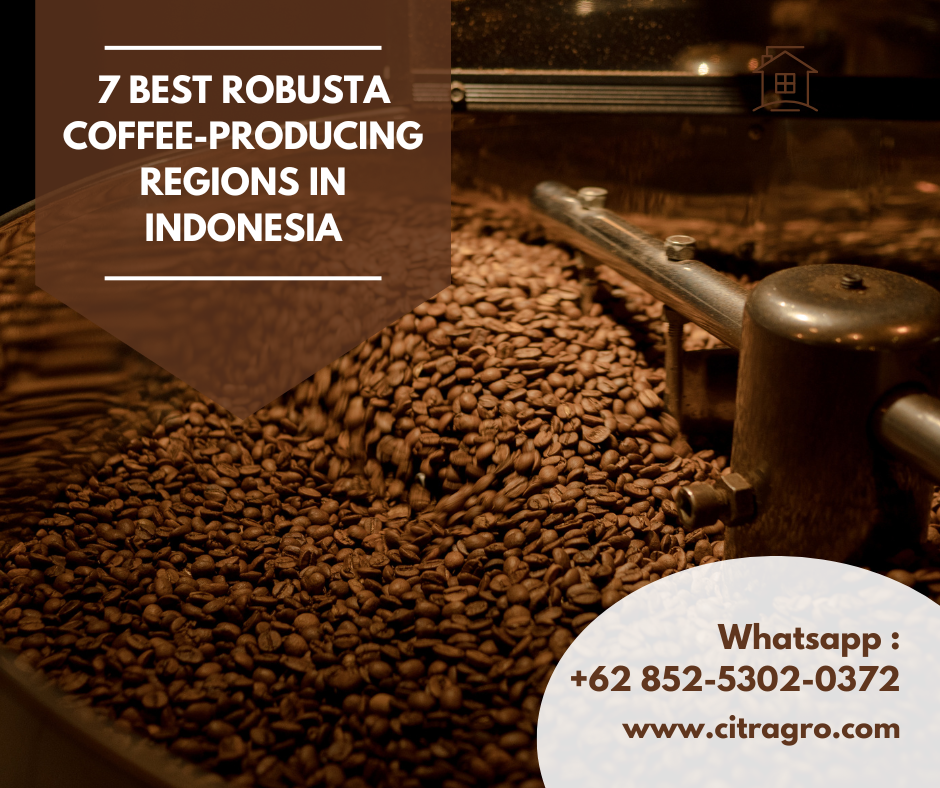
Indonesia is globally recognized as one of the top coffee-producing countries. Aside from Arabica, Robusta coffee is a major commodity that thrives across the archipelago. Known for its bold flavor, higher caffeine content, and resistance to pests, Robusta is well-suited for low to mid-altitude regions. Various areas in Indonesia have established themselves as top Robusta producers, supplying both domestic needs and international markets.
This article explores the 7 best Robusta coffee-producing regions in Indonesia, highlighting their quality, production scale, and global reputation.
What is Robusta Coffee and Why is It Important to Indonesia?
Characteristics of Robusta Coffee
Robusta coffee (Coffea canephora) is one of the two most cultivated coffee species, alongside Arabica. Its main traits include:
- Grows in low to medium altitudes (200–800 meters above sea level),
- Higher caffeine content (2.2%–2.7%),
- Bitter, earthy, and strong flavor profile,
- Higher resistance to pests and diseases,
- Greater productivity and lower maintenance costs.
Robusta’s Strategic Role in Indonesia’s Coffee Industry
According to data from the Indonesian Central Bureau of Statistics (BPS) and the Ministry of Agriculture, around 74% of the country’s total coffee production is Robusta. Its importance lies in:
- Supporting millions of smallholder farmers, particularly in Sumatra and Java,
- Serving as a key export commodity to countries like Italy, Germany, and Japan,
- Used extensively in instant coffee and espresso blends by major global industries.
The 7 Best Robusta Coffee-Producing Regions in Indonesia
1. Lampung – The King of Robusta in Indonesia
Production and Plantation Size
Lampung is Indonesia’s largest Robusta-producing region, with over 160,000 hectares of plantations and contributing around 25% of national output.
Flavor Profile
Lampung Robusta is famous for its strong body, chocolatey bitterness, and spicy aroma.
Key Producing Areas
Tanggamus, West Lampung, and Pesisir Barat.
2. Bengkulu – The Hidden Gem of Bukit Barisan
Emerging Potential
Though less renowned than Lampung, Bengkulu (especially Rejang Lebong and Kepahiang) is gaining recognition for its excellent Robusta.
Unique Notes
Bengkulu Robusta has a bold taste, natural bitterness, and earthy nutty aroma.
3. South Sumatra – Globally Recognized People’s Coffee
Leading Districts
Lahat, Empat Lawang, and Muara Enim are the primary Robusta-growing areas.
Coffee Profile
Robusta from South Sumatra has a medium to full body, robust flavor, and is gaining popularity abroad due to certifications and branding efforts.
4. East Java – Robusta from Volcanic Slopes
Major Producing Regions
Bondowoso, Jember, and Malang are known for both smallholder farms and state-owned plantations.
Strengths
Backed by modern farming and processing methods, East Java Robusta boasts consistent quality—ideal for both packaged coffee and exports.
5. Central Java – Strong Robusta from Mountain Slopes
Key Regions
Kebumen, Temanggung, and Banjarnegara are prominent Robusta-growing areas.
Taste Notes
Central Java Robusta has a milder profile with a distinctive bitter aftertaste—perfect for beginners wanting to explore Robusta.
6. Bali – Robusta Beyond Kintamani
Cultivation Areas
Buleleng and Tabanan are emerging hubs for high-quality Robusta in Bali.
Highlights
Although Bali is more famous for its Kintamani Arabica, its Robusta is increasingly valued for clean processing, natural fermentation, and smoother taste.
7. East Nusa Tenggara (NTT) – The Eastern Coffee Paradise
Growing Regions
Manggarai, Ende, and Sikka are known for cultivating unique Robusta coffee.
Distinctiveness
Robusta from NTT is grown in drylands using traditional methods, producing complex earthy, spicy, and bold flavor profiles.
Key Factors Affecting Robusta Coffee Quality in Indonesia
Climate and Altitude
Robusta thrives in tropical climates with 24–30°C temperature and 1,500–3,000 mm rainfall per year—conditions abundantly found in Indonesia.
Farming and Processing Methods
Selective harvesting, organic fertilization, and processing techniques like natural or full-wash significantly influence final cup quality.
Certifications and Government Support
Programs like Geographical Indications (GI) and organic certifications help elevate the global appeal and value of Indonesian Robusta.
The Future of Robusta Coffee in Indonesia
Global Market Trends
More consumers and roasters are showing interest in single origin Robusta, not just blends—offering new opportunities for Indonesian producers.
Empowering Farmers
Training, cooperatives, and post-harvest technologies are key to enabling smallholder farmers to compete on the global stage.
Local Brands and Young Entrepreneurs
Indonesian youth are developing local Robusta brands, opening Robusta-focused cafés, and leveraging e-commerce, driving demand for quality Robusta.
Conclusion
Indonesia’s Robusta coffee is not just about quantity—it’s about diversity, character, and excellence. From Lampung to NTT, each region brings unique flavor notes and traditions, making Robusta a true national treasure. With the right support and innovation, Indonesia has the potential to become the world leader in premium Robusta coffee.

