
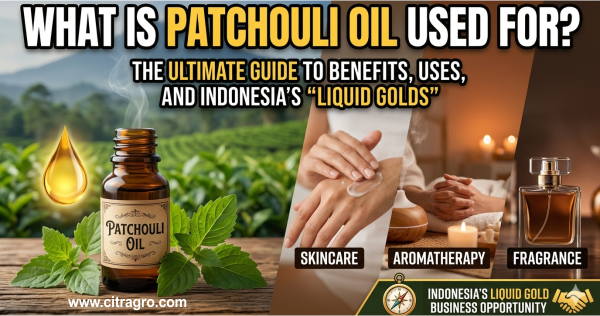
What Is Patchouli Oil Used For? The Ultimate Guide to Benefits, Uses, and Indonesia’s “Liquid Gold” Business Opportunity
Have you ever wondered why luxury perfumes last all day on your skin? Or how natural skincare products manage to fade scars without harsh chemicals? The answer often comes down to one secret ingredient: patchouli oil.
Indonesia, as the world’s largest producer supplying approximately 90% of global demand, holds this liquid treasure. But for the average person, a simple question lingers: What is patchouli oil used for exactly? Why is this Indonesian commodity so highly sought after by the high-end perfume industry in France and major cosmetics brands in America?
In this pillar article, we will thoroughly explore everything about patchouli oil. From its role as the backbone of global fragrances, its benefits for skin and mental health, to its incredible economic potential as a business opportunity. Get ready to get to know “Liquid Gold” from the archipelago.
What Is Patchouli Oil? Getting to Know “Patchouli Oil” Up Close
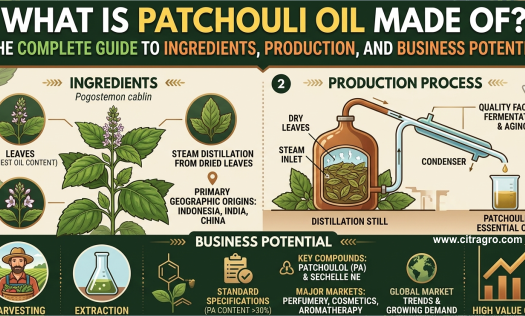
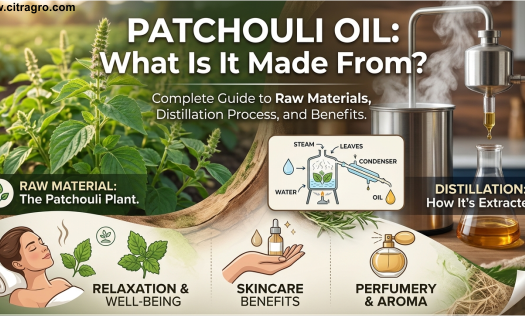
Before we answer the core question of what is patchouli oil used for, it’s important to understand what this magical ingredient actually is. Patchouli oil, internationally known as Patchouli Oil, is an essential oil extracted through steam distillation from the leaves of the Pogostemon cablin Benth plant. This plant is related to the mint family (Lamiaceae), but it has a very unique character.
The main characteristic of patchouli oil is its distinctive aroma: earthy, musky, and slightly sweet. For some, this scent may seem heavy at first, but its beauty lies in how it develops over time.
The Chemical Magic Behind the Scent
What makes patchouli so special scientifically? The answer lies in its primary compound: Patchouli Alcohol (PA). The higher the PA content in patchouli oil, the higher its quality. Indonesian patchouli oil is famous for having a PA content above 30%, a global gold standard.
This compound provides the fixative property—the remarkable ability to bind other aroma molecules so they don’t easily evaporate. Think of it this way: if other fragrances are solo singers whose voices fade quickly, patchouli is the backing vocalist that makes the entire performance resonate longer and deeper.
Core Discussion: What Is Patchouli Oil Used For Across Different Fields?
Now, let’s dive into the core of this article. Below is a complete breakdown of patchouli oil’s uses, from the most massive industrial applications to therapeutic ones.
1. The Perfume Industry: The Backbone of Luxury Fragrances
If you ask a professional perfumer what is patchouli oil used for, their answer will be direct: as a fixative and a base note.
Why Can’t World-Class Perfumes Do Without Patchouli?
Without patchouli oil, the expensive perfume you use might only last 30 minutes to an hour. The sweet scent of rose or fresh citrus would quickly fade due to body heat and oxidation. Here’s where patchouli plays a crucial role:
- Slows Down Evaporation (Fixative): The heavy molecules in patchouli hold the lighter molecules of top notes and middle notes, making the entire fragrance composition last much longer—6 to 8 hours or even more.
- Provides Depth (Base Note): Patchouli creates a masculine, sensual, and mysterious character that forms the foundation of many iconic perfumes. Examples include Chanel No. 5, Dior Sauvage, Gucci by Gucci, and Thierry Mugler Angel.
- Aroma That Improves With Age: Unlike many essential oils that can go rancid, patchouli oil’s aroma quality actually matures like wine. The longer it’s stored, the smoother and richer its scent becomes.
Fun Fact: The global perfume industry consumes over 90% of the world’s patchouli oil production. Every bottle of luxury perfume typically contains 1-5% patchouli oil in its composition.
2. Skincare: A Natural Solution for Scars & Aging
For fans of clean beauty and natural skincare, the answer to what is patchouli oil used for is closely tied to skin cell regeneration.
Patchouli oil is rich in anti-inflammatory, antiseptic, and cytotoxic compounds (which stimulate new cell growth). Let’s look at its applications:
A. Fading Scars (Stretch Marks & Acne Scars)
This is perhaps the most sought-after benefit of patchouli. Patchouli oil effectively fades:
- Stretch marks (especially after pregnancy or drastic weight loss)
- Acne scars (post-inflammatory hyperpigmentation)
- Surgical or injury scars
How it works: patchouli stimulates blood circulation in the skin area and encourages collagen production, so dead skin cells are replaced with healthy new tissue.
B. Fighting Acne and Oily Skin
Contrary to the assumption that oil clogs pores, patchouli oil has strong antibacterial properties against Propionibacterium acnes (the bacteria that causes acne). Additionally, patchouli helps regulate excess sebum production, making it an excellent ingredient for oily and combination skin.
C. Natural Anti-Aging
The antioxidants in patchouli oil help fight free radicals that cause premature aging. Regular use (in the right dosage) can help tighten sagging skin and reduce fine lines around the eyes and mouth.
D. Managing Chronic Skin Conditions
In both traditional and modern medicine, patchouli oil is often used as complementary therapy for:
- Eczema (Atopic Dermatitis): Its anti-inflammatory properties reduce redness and itching.
- Psoriasis: It helps moisturize and reduce skin cell thickening.
- Cracked Heels: Patchouli effectively heals dry, cracked skin on heels or elbows.
3. Aromatherapy & Mental Health: A Natural Nervous System Calmer
In the world of holistic healing, the question what is patchouli oil used for points to its psychological effects. The earthy, grounding scent of patchouli is believed to calm chaotic energy.
Psychological Benefits of Patchouli Oil:
- Relieves Anxiety (Anxiolytic): A scientific study showed that inhaling patchouli oil through a diffuser can significantly lower levels of the stress hormone cortisol. This is very helpful for people with anxiety disorders or panic attacks.
- Improves Sleep Quality (Insomnia): For those who have trouble sleeping due to an overactive mind, patchouli’s aroma creates a relaxing atmosphere that naturally triggers melatonin production. Add 3-5 drops to your bedroom diffuser.
- Natural Aphrodisiac: Since ancient times in India and China, patchouli has been used to boost libido. Its sensual, earthy scent stimulates endorphin release and naturally increases arousal.
- Eases Sadness & Mild Depression: Patchouli’s aroma helps release pent-up emotions and provides a comforting, “warm hug” feeling for the soul.
4. Physical Health: Antifungal, Wound Healer, and Fever Reducer
Beyond skin and mental health, medical research continues to reveal patchouli oil’s potential in other areas of physical wellness.
- Natural Antifungal: Patchouli oil is very effective against skin fungi. It’s a natural solution for athlete’s foot, ringworm, and fungal nail infections. Simply apply a mixture of 2 drops patchouli + 1 tbsp coconut oil to the affected area twice daily.
- Accelerates Wound Healing: Patchouli’s hemostatic (stops bleeding) and antiseptic properties make it ideal for first aid on small cuts, scrapes, or insect bites. It protects the wound from secondary infection while speeding up tissue regeneration.
- Fever Reducer: In traditional Southeast Asian medicine (including Indonesia), patchouli is used to reduce fever. Method: mix patchouli oil with coconut oil, then massage onto the chest, back, and soles of the feet of a feverish child or adult.
- Eases Digestive Issues: Inhaling patchouli (or a diluted abdominal massage) can help relieve nausea, bloating, and stomach aches due to its carminative properties.
5. Natural Insect Repellent: An Ancestral Legacy Backed by Science
This is a fascinating historical function of patchouli. You might ask, what is patchouli oil used for in the past, before modern perfumes?
The answer: to protect fabrics and repel insects.
In the 19th century, when expensive silk and fabrics were shipped from Asia to Europe along the Silk Road, merchants always tucked dried patchouli leaves between the folds of the fabric. Why? Because patchouli’s strong scent is detested by moths, booklice, and mosquitoes.
Modern Scientific Proof: Laboratory research confirms that patchouli oil contains compounds that are both natural insecticides (killing insects) and repellents. It is effective against Aedes aegypti (dengue fever mosquito) and Anopheles (malaria mosquito).
How to make a natural mosquito spray: Mix 10 drops patchouli oil + 10 drops citronella oil + 100 ml water in a spray bottle. Shake well and spray around your bed or on clothing.
Practical Guide: How to Use Patchouli Oil Safely
Understanding what is patchouli oil used for is incomplete without knowing the proper way to use it. Patchouli oil is a 100% pure, highly concentrated essential oil. Improper use (especially applying directly to the skin without dilution) can cause serious irritation.
The Golden Rule: Always Dilute!
Never apply undiluted patchouli oil directly to your skin. Always mix it with a carrier oil.
Usage & Dilution Table:
| Method of Use | How to Apply | Amount of Patchouli | Carrier Oil / Medium | Frequency |
|---|---|---|---|---|
| Topical (Skin) | Gently massage onto scars, acne, or stretch marks | 2-3 drops | 1 tablespoon (15ml) coconut, jojoba, or olive oil | 1-2 times daily |
| Aromatherapy | Use an ultrasonic diffuser | 4-6 drops | Water in diffuser | Max 30-60 minutes |
| Relaxing Bath | Mix into warm bath water | 5-10 drops | Mix first with 1 tbsp Epsom salt or honey to disperse | 2-3 times per week |
| Fever Compress | Apply to a warm, damp cloth, place on forehead | 3 drops | 100 ml warm water | As needed |
| Household Products | Add to liquid soap, shampoo, or unscented detergent | 10-15 drops per 100ml product | – | When washing |
Important Safety Warnings:
- Do Not Ingest: Patchouli oil is NOT for internal consumption. It can damage mucous membranes and the esophagus.
- Allergy Test: Always do a patch test (apply a small amount of diluted mixture behind your ear or inner elbow) and wait 24 hours.
- Pregnancy & Breastfeeding: Avoid use, especially during the first trimester. Consult your midwife or doctor.
- Pets: Concentrated patchouli scent can be toxic to cats and dogs. Do not use a diffuser in the same room as your pets.
Economic Potential: Patchouli Oil as Indonesia’s “Liquid Gold”
For farmers, entrepreneurs, and investors, the question what is patchouli oil used for boils down to one word: PROFIT.
Indonesia holds a natural monopoly over this commodity. Let’s break down why patchouli is called “Liquid Gold.”
Why Is Indonesian Patchouli Oil So Valuable Globally?
- Highest Quality: Major patchouli-producing regions like Aceh (Tapaktuan patchouli), Sulawesi (Masamba patchouli), and Central Java produce oil with the world’s highest Patchouli Alcohol (PA) content (30-35%). This is a standard that other countries like India or Brazil struggle to match.
- Stable & Growing Demand: The global perfume industry cannot fully replace natural patchouli with synthetic alternatives because patchouli’s complex aroma cannot be perfectly replicated in a lab. Add to that the rising trend of clean beauty and natural living.
- Competitive Price: The international price of patchouli oil (FOB Belawan or Surabaya) remains stable around USD 30–60 per kg, depending on quality. During shortages, prices can spike to USD 100 per kg.
- Export Market: Nearly 100% of Indonesia’s distilled patchouli oil is not consumed domestically but exported to:
- France (global perfume hub)
- United States (cosmetics and aromatherapy candle industry)
- Singapore (Asian essential oil trading hub)
- India (incense and traditional fragrance industry)
Business Opportunities for Farmers & Beginners
You don’t need a large factory to get started. You can begin on a small scale:
- Cultivating Patchouli Plants: Patchouli is relatively easy to grow on rain-fed land. One hectare can yield 10-15 tons of fresh leaves per year.
- Simple Distillation: With an investment in a still (capacity 200-500 liters, priced around USD 1,000–2,000), you can distill your own harvest. Profits are much higher than selling raw leaves.
- Value-Added Products: Don’t just sell raw oil. You can package patchouli oil into ready-to-use products like aromatherapy roll-ons, patchouli soap, or massage oils. The retail value can increase 5-10 times.
Beginner’s Guide to Growing Patchouli (Quick Tips)
If you’re interested in growing patchouli after learning about its many benefits and economic potential, here are some technical tips:
- Seed Selection: This is crucial. Use disease-resistant superior varieties, especially Sidikalang patchouli (from North Sumatra) or Lhokseumawe patchouli. These are more resistant to bacterial wilt—a major threat to patchouli farmers.
- Land Preparation: Patchouli prefers loose, humus-rich soil with pH 5.5-6.5 and good drainage. Create raised beds 20-30 cm high.
- Planting: Use stem cuttings (15-20 cm long, 3-4 nodes). Plant at the start of the rainy season with a spacing of 60×60 cm or 80×80 cm to avoid overcrowding.
- Harvest: The first harvest can be done when the plant is 6-8 months old. Signs: thick leaves, dark green color, and slight yellowing at the edges. Cut branches 15-20 cm above ground so new shoots grow quickly.
- Distillation: Both fresh and wilted (sun-dried for 1-2 days) patchouli leaves can be distilled. The key is to keep the steam not too hot and ensure the condenser works optimally so the oil doesn’t evaporate.
Diseases to Watch Out For: Bacterial wilt (Ralstonia solanacearum) and nematodes. Practice crop rotation and don’t plant patchouli in the same field consecutively.
Myths and Facts About Patchouli Oil
As patchouli oil grows in popularity, many misconceptions circulate. Let’s clear up some myths about what is patchouli oil used for.
| Myth | Fact |
|---|---|
| Myth: You can drink patchouli oil directly for detox or internal diseases. | Fact: VERY DANGEROUS. Pure essential oils are strong irritants to the digestive tract. Internal use should only be under strict supervision of a clinical aromatherapy doctor. |
| Myth: All patchouli oil smells the same. | Fact: No. Patchouli’s aroma is heavily influenced by terroir (soil, climate) and distillation process. Aceh patchouli tends to be heavy, woody, and slightly camphoraceous. Java patchouli is lighter and slightly sweet. |
| Myth: Patchouli oil is only for old people or “hippie” scents. | Fact: Quite the opposite. Patchouli is a favorite base note in modern, expensive, luxury perfumes. Many contemporary (millennial and Gen Z) fragrances use patchouli as a unisex touch. |
| Myth: Patchouli oil clogs pores (comedogenic). | Fact: Patchouli has a comedogenic rating of 2 (scale 0-5), meaning low risk of clogging pores. In fact, its antimicrobial properties help clear pores of acne-causing bacteria. |
| Myth: The darker the patchouli oil, the better. | Fact: Good quality patchouli oil is yellowish-brown to golden-brown. If it’s very dark (almost black) or too green, it may indicate poor distillation (overheating or metal contamination). |
Conclusion: Patchouli Oil Is a Treasure That Keeps Shining
After reading this in-depth guide, you now know exactly what is patchouli oil used for. The answer is far broader than most people imagine.
It is:
- The unsung hero behind long-lasting, expensive perfumes.
- A natural doctor for skin wanting to be free from scars, acne, and aging.
- A soul therapist that calms anxiety and brings peace in a chaotic world.
- A traditional insect repellent with scientifically proven effectiveness.
- A flagship export commodity that generates foreign exchange for Indonesia and creates jobs for thousands of farmers in Aceh, Sulawesi, and Java.
With all its medical benefits, stable economic value, and Indonesia’s position as the global market leader, it’s time we take pride in this “Liquid Gold.” Whether you are a consumer looking for natural solutions for beauty and health, or an entrepreneur with a keen eye for opportunity, patchouli oil is a future investment that is fragrant, profitable, and sustainable.
Read also: Indonesia’s Premium Patchouli Oil Supplier for Export
Quick Summary: 7 Main Benefits of Patchouli Oil
| No | Field | Main Benefit |
|---|---|---|
| 1 | Perfumery | Fixative (aroma binder), base note for luxury fragrances |
| 2 | Skincare | Fades scars, stretch marks, acne, anti-aging |
| 3 | Mental Health | Relieves anxiety, treats insomnia, aphrodisiac |
| 4 | Physical Health | Antifungal, wound healer, fever reducer |
| 5 | Household | Natural mosquito, moth, and insect repellent |
| 6 | Aromatherapy | Grounding, emotional stabilization, improves focus |
| 7 | Business | High-value export commodity, agro-industry potential |
Related Keywords to Explore:
Benefits of patchouli oil for face, how to distill patchouli oil at home, patchouli oil price per kg 2025, patchouli plant from Aceh, natural perfume ingredients Indonesia, home-based essential oil business.
Ready to Unlock the Golden Potential of Patchouli Oil? Consult Us for Free!
Still unsure which patchouli oil suits your cosmetics or perfume business? Or looking to start your own cultivation and distillation? Our team is here to guide you.
- Herbal Products & Essential Oil Consultation (Indonesia): Contact Citragro Indonesia at 📧 citragro@gmail.com or visit 🌐 www.citragro.com
- Business & Property Consultation (Patchouli Farmland Investment): Contact Yonathan Chen at 📧 yonathanchen27@gmail.com or 🌐 www.yonathanchen.com
- Instant Chat via WhatsApp: Click 📲 085253020372 (Fast Response Team)