
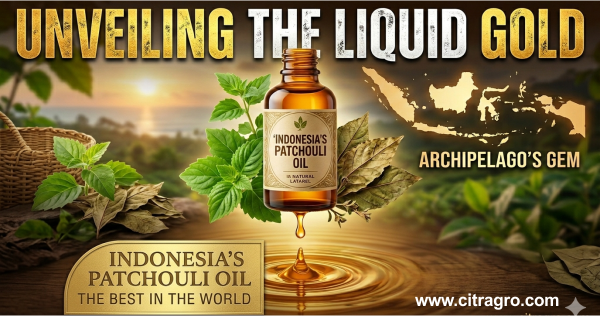
Unveiling the Liquid Gold of the Archipelago: Why Indonesia’s Patchouli Oil is the Best in the World
Behind every luxury perfume worn in Paris, every premium skincare product used in New York, and every high-end aromatherapy diffuser in Tokyo lies a secret deeply rooted in the tropical soils of Southeast Asia. That secret is patchouli oil—locally known as minyak nilam.
For decades, an indisputable fact has echoed through the halls of global fragrance houses like Chanel, Dior, and Tom Ford: Indonesia’s Patchouli Oil is the Best in the World. This is not merely national pride; it is a chemical, agricultural, and commercial reality.
As a flagship export commodity, Indonesian patchouli oil is more than just an agricultural product. It is “liquid gold” that controls nearly 85% of the global market share. But what exactly makes its quality superior to producers like India, China, or Brazil? How is it produced, and what are the investment opportunities in this fragrant sector?
This pillar article will comprehensively explore everything about Indonesian patchouli oil—from its botanical characteristics and chemical superiority to key production regions, quality standards, and actionable business tips for those looking to enter this lucrative industry.
1. What is Patchouli Oil? Understanding the “Green Gold”
Before diving into the “why,” let us define the “what.”
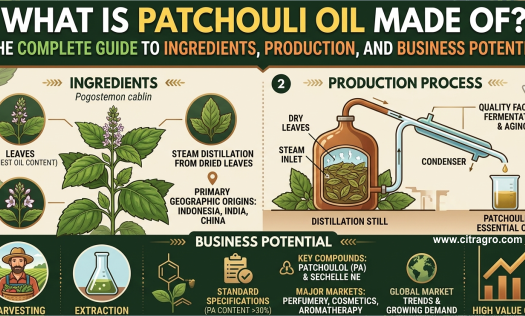
Patchouli oil is an essential oil extracted through steam distillation of the dried leaves and young twigs of the Pogostemon cablin Benth plant. This plant belongs to the Lamiaceae family (the mint family). However, unlike its mint relatives which smell fresh and crisp, patchouli possesses a distinct, complex aroma profile: earthy (like wet soil after rain), woody, camphoraceous, slightly sweet, and balsamic.
The Three Main Varieties Globally
While several species exist, only one dominates the premium export market:
- Pogostemon cablin Benth: The superstar. This variety produces the highest oil yield (2-4% of dry weight) and the richest chemical composition. It is the sole reason why Indonesia’s Patchouli Oil is the Best in the World.
- Pogostemon heyneanus: Often called Java patchouli. It has a weaker scent and is mostly used for local traditional medicine or low-grade incense.
- Pogostemon hortensis: Known as “soap patchouli,” rarely distilled due to low oil content and poor aromatic quality.
The Critical Function: Natural Fixative
In the global fragrance industry, patchouli oil serves one irreplaceable role: a fixative. A fixative is a substance that slows down the evaporation rate of lighter, more volatile fragrance components.
Think of a perfume as a symphony. The top notes (citrus, light florals) are the violins—they fade quickly. The heart notes are the cellos. Patchouli oil is the double bass—it resonates long after the other instruments have stopped. The sesquiterpenes in patchouli oil anchor volatile molecules to the skin, allowing a perfume to last for hours, sometimes days. To date, no synthetic chemical has successfully mimicked the perfect fixative properties of natural patchouli oil. This is why the world’s luxury perfumes cannot escape Indonesia.
2. 5 Scientific & Historical Reasons Why Indonesia’s Patchouli Oil is Superior
Why does the world always return to Indonesia? The answer lies in a perfect storm of nature, genetics, and generational expertise.
1. Exceptionally High Patchouli Alcohol (PA) Content
This is the most crucial metric. Patchouli oil quality is measured by its concentration of Patchouli Alcohol (PA) , a sesquiterpene alcohol responsible for the characteristic long-lasting aroma.
- International Standard (ISO 3757): Minimum 30% PA.
- Indian / Madagascan Patchouli: Average 28% – 32%.
- Indonesian Patchouli: Consistently 32% – 38%, with premium grades reaching 40%.
Higher PA means manufacturers need less oil to achieve the same fixative effect, making it more economical. Scientists have proven that Indonesia’s volcanic soil and equatorial climate (12 hours of daily sunlight) force the Pogostemon cablin plant to produce massive amounts of PA as a self-defense mechanism.
2. Unique Geography and Volcanic Soil
Indonesia sits on the “Ring of Fire.” The volcanic soil in Sulawesi, Sumatra, and Java is rich in macronutrients (Nitrogen, Phosphorus, Potassium) and micronutrients (Magnesium, Sulfur, Iron).
Coupled with consistent rainfall (2,000–4,000 mm/year) and optimal altitude (100–700 meters above sea level), this creates the perfect terroir. Like fine wine grapes in France, Indonesian patchouli produces a full-bodied, complex, and non-harsh aroma. Patchouli from other countries often smells sharp, “dirty,” or smoky due to improper drying or poor soil.
3. Absolute Global Market Dominance (80-85% Market Share)
If you hold a bottle of famous branded perfume, 9 out of 10 times it contains Indonesian patchouli oil. Data from the ITC Trade Map and the Indonesian Essential Oil Council (DAI) shows that Indonesia supplies 80-85% of the world’s patchouli oil demand. The remaining 15-20% is shared by India, Brazil, and China.
This dominance is not just about volume; it is about consistency. Buyers in Europe and the US have transacted with Indonesian exporters for decades because the quality grades remain stable. “Indonesian Patchouli” is an industry shorthand for “high standard.”
4. Mature, Smooth, and Complex Aroma Profile
In sensory evaluations conducted by global flavor and fragrance giants like Givaudan, Firmenich, and IFF, Indonesian patchouli oil consistently scores highest for its dry-down (the scent left on skin after hours of wear).
- Chinese/Indian Patchouli: Often contains off-notes such as smoky, sour, or metallic smells.
- Indonesian Patchouli: Features a smooth, balsamic, and earthy undertone with a hint of natural sweetness. This is highly preferred for Oriental and Woody fragrance families.
5. Traditional Post-Harvest Processing (The Curing Secret)
Farmers in Aceh and Sulawesi have cultivated patchouli for generations. They possess a crucial indigenous knowledge: the curing process. Freshly harvested patchouli leaves (which have ~80% water content) cannot be distilled immediately.
Indonesian farmers sun-dry the leaves for a few hours, then air-dry them in shaded, well-ventilated racks for 3 to 7 days. This curing process triggers enzymatic hydrolysis, which releases bound essential oils and reduces water content to 15-20%. This technique maximizes both yield and aromatic quality—a method often skipped by new producers.
3. Quality Standards & Chemical Specifications (SNI & ISO)
To understand why this product commands premium prices, one must analyze its technical specifications. Indonesia’s National Standardization Agency (BSN) established SNI 06-2385-2006 to maintain export quality.
| Test Parameter | SNI Standard (Good Quality) | Indonesian Premium Patchouli Advantage |
|---|---|---|
| Color | Pale yellow to dark brown | Bright golden yellow (when distilled with stainless steel) |
| Odor | Characteristic patchouli, persistent | Strong, woody, earthy, wine-like, highly tenacious |
| Specific Gravity (20°C) | 0.950 – 0.975 | 0.955 – 0.965 |
| Refractive Index (20°C) | 1.507 – 1.515 | 1.508 – 1.512 |
| Solubility in 90% Ethanol | 1:10 clear solution | 1:8 clear solution (higher quality) |
| Patchouli Alcohol (PA) | Min. 30% | 32% – 38% (Key advantage) |
| Acid Value | Max 8.0 | Usually 1.0 – 4.0 (indicates fresh oil) |
| Iron Content (Fe) | Max 25 mg/kg | < 10 mg/kg (modern stainless steel distillation) |
Critical Note for Buyers: Pay attention to Iron (Fe) content. If distillation uses old iron drums, the oil turns dark greenish-black and smells like rust. The best patchouli oil in the world must be distilled using Stainless Steel 304 equipment to produce the bright, clear yellow color demanded by the European cosmetics market.
4. Regional Map of Indonesia’s Patchouli Production
Different islands in the archipelago produce slightly different patchouli characteristics due to varying soil conditions.
1. Aceh Patchouli (Tapaktuan) – The Legend
Historically, South Aceh (Tapaktuan) is considered the producer of the highest sensory quality. The local Aceh variety has thicker leaves and extremely high PA content. Aceh patchouli oil has the mildest and smoothest aroma, often commanding a 10-15% price premium in the French perfume market.
2. Sulawesi Patchouli – The Workhorse (60% of National Production)
Currently, Southeast Sulawesi (Kolaka, Konawe), South Sulawesi (Luwu), and Central Sulawesi (Morowali) are the rice bowls of “liquid gold.” The relatively new, nutrient-rich volcanic soil in Sulawesi produces high volumes with stable PA content (32-35%). Sulawesi patchouli has a “stronger” and “firmer” character, preferred by large-scale fragrance manufacturers.
3. Other Sumatra Regions (North & West Sumatra)
Areas like Sidikalang (North Sumatra) and Pasaman (West Sumatra) are also key producers. Their advantage is disease resistance, ensuring stable supply year-round.
4. Java Patchouli (DIY, Central Java, East Java)
Although production volume is smaller than Sulawesi, Java patchouli is often linked to the organic market. Many farmers in Kebumen and Purbalingga have switched to pesticide-free cultivation, making this oil attractive to niche European buyers.
5. The Production Process – From Farm to “Liquid Gold”
Premium quality is not achieved instantly. It requires a meticulous process from upstream cultivation to downstream distillation.
Step 1: Seedling & Planting
Using stem cuttings from superior mother plants (usually Tapaktuan or Lhokseumawe varieties). Plants are grown in loose soil with 30-50% shade during early growth.
Step 2: Harvesting (First harvest at 6-8 months)
Farmers harvest leaves + young twigs. The best time is early morning when water content is high but metabolism is active. Patchouli can be harvested every 3-4 months after the first harvest.
Step 3: Curing – The Secret Step
Leaves are spread on tarps. They are sun-dried for ~3 hours in the morning, then air-dried on bamboo racks for 3-5 days. Purpose: Reduce water content from 80% to 15-20% and break down chlorophyll to prevent a “green” or raw smell.
Step 4: Steam Distillation
Dried leaves are loaded into a still. Pressurized steam (1-2 bar) flows from bottom to top for 10-12 hours.
- *Hours 1-4:* Light volatile oils come out.
- *Hours 6-12:* Patchouli Alcohol (high boiling point) comes out. Stopping distillation too early results in low PA content.
Step 5: Separation & Storage
The steam-oil mixture passes through a condenser. Water and oil separate in a Florentine flask. Crude oil is stored in stainless steel drums, settled (left to stand) for 1 week to remove residual water, then packaged for export.
6. Incredible Benefits Across Industries
The popularity of Indonesia’s Patchouli Oil is the Best in the World extends beyond expensive perfumes. Here are four major industries that are loyal consumers:
1. Fine Fragrance Industry (Perfumery)
As explained, as a fixative. Iconic perfumes like Chanel Coco Mademoiselle, Gucci Intense Oud, and Tom Ford Patchouli Absolu use high doses of Indonesian patchouli oil to provide depth and longevity (12+ hours).
2. Cosmetics & Skincare
Patchouli oil possesses anti-inflammatory, antiseptic, and cicatrizant (scar-healing) properties.
- Products: Acne creams, anti-aging serums, natural soaps, deodorants.
- Benefits: Reduces acne inflammation, accelerates skin cell regeneration, moisturizes dry skin, and fights body odor naturally.
3. Aromatherapy & Mental Health
In diffusers, patchouli oil is known for its grounding effect. Its earthy aroma helps reduce stress, anxiety, and insomnia by stimulating the release of serotonin and dopamine.
4. Home Care & Detergents
Premium fabric softeners and luxury home fragrances use Indonesian patchouli oil for its complex, long-lasting scent that masks synthetic chemical odors.
7. Business Opportunities & Export Potential
Given Indonesia’s leadership position, the business opportunities in this sector are immense.
Global Trends Favoring Indonesia
The world is moving toward green chemistry and clean beauty. Consumers in the US and Europe now read labels. They avoid phthalates and synthetic fixatives. This shift is increasing demand for natural fixatives like patchouli by 8-10% annually (FAO 2023-2025 data).
Economic Projections
- Export Price (FOB Jakarta): Currently ranges from 25–45 per kg depending on PA level.
- Fractionation Potential: If you invest in Fractional Distillation technology to isolate Patchouli Alcohol up to 70-80% purity, the selling price can soar to 150–150–200 per kg for the pharmaceutical and ultra-premium perfume market.
How to Start? A Strategic Guide
Looking for a reliable partner? You can start by contacting [Indonesia’s Premium Patchouli Oil Supplier for Export] (#) to get authentic, high-PA oil directly from trusted distillers.
- Don’t Sell Raw: If you are a small distiller, perform double distillation or rectification to increase PA content by 2-3 points.
- Certification is Key: European buyers now demand Organic Certificate, Fair Trade, or a COA (Certificate of Analysis) from an accredited lab (GC-MS testing).
- Build Partnerships: Join cooperatives or farmer groups to stabilize supply volume and reduce certification costs.
8. Challenges & Sustainability Solutions
Despite holding the crown for Indonesia’s Patchouli Oil is the Best in the World, the industry faces challenges that must be addressed to maintain its leadership.
Challenge 1: Supply Volatility
Periodic oversupply crashes prices, followed by undersupply that drives buyers to India.
Solution: Implement contract farming systems. Large exporters are already doing this. Farmers get a guaranteed price, exporters get guaranteed supply.
Challenge 2: Pests & Diseases (Bacterial Wilt & Budok)
Ralstonia solanacearum (wilt) and Phylosticta virus (Budok) often destroy patchouli fields on a massive scale.
Solution: Use pathogen-free tissue culture seedlings and practice crop rotation with legumes or corn.
Challenge 3: Deforestation Concerns
Some international buyers worry that patchouli farms contribute to illegal deforestation.
Solution: Implement Traceability Systems. Exporters must prove the oil comes from legal, sustainable land. Rainforest Alliance certification is becoming a high-value selling point.
9. Frequently Asked Questions (FAQ)
Q: Is patchouli oil the same as vetiver oil?
A: No. Patchouli comes from Pogostemon cablin leaves (earthy, sweet). Vetiver comes from the roots of a grass (smoky, dry soil). They are often blended in woody perfumes.
Q: How do I identify genuine Indonesian patchouli oil vs. fake?
A: Drop one drop on plain white paper. Genuine oil will evaporate slowly (leaving an oily stain) and its scent will last for days. Fake oil (mixed with mineral oil or DPG) evaporates quickly and lacks the characteristic earthy scent.
Q: Can I apply patchouli oil directly to my skin?
A: Not recommended. 100% pure patchouli oil is potent and may cause irritation on sensitive skin. Always dilute with a carrier oil (coconut, jojoba, almond) at a ratio of 1-2 drops patchouli : 10 ml carrier oil.
Q: How long should patchouli oil be distilled for optimal quality?
A: Minimum 8 hours, ideally 10-12 hours. Fast distillation (4-5 hours) produces oil with PA content below 25%, which is not suitable for export to the luxury perfume industry.
Conclusion: The Irreplaceable Masterpiece of the Archipelago
From the sloping farms on Sulawesi’s volcanoes to the perfume laboratories in Grasse, France, the fact remains undeniable: Indonesia’s Patchouli Oil is the Best in the World. It is living proof that the Indonesian archipelago produces globally superior products.
The high Patchouli Alcohol (PA) content, supported by volcanic tropical soil and generations of traditional processing expertise, makes this “liquid gold” uncompetitive by any other nation. As long as the world produces perfume, the world will need Indonesia.
For farmers, entrepreneurs, and investors, this sector offers a green and profitable future. By adopting modern stainless steel distillation, sustainable agricultural practices, and marketing strategies that emphasize quality over volume, we can ensure that Indonesia remains not just the supplier, but the global standard-setter for patchouli quality.
The liquid gold of the archipelago continues to flow, perfuming the world with excellence.
Ready to source the highest quality essential oil? Contact [Indonesia’s Premium Patchouli Oil Supplier for Export] (#) today to get certified, high-PA patchouli oil directly from Indonesian farms to your factory.
Ready to Source the World’s Best Patchouli Oil? Contact Citragro Indonesia Today!
Are you a distiller looking to improve quality? An exporter seeking a reliable supply of Indonesia’s Patchouli Oil is the Best in the World with stable Patchouli Alcohol (PA) content? Or an investor exploring opportunities in Indonesia’s essential oil sector?
Don’t miss out on this liquid gold opportunity. Our team at Citragro Indonesia is ready to assist you with:
- Consultation on Indonesian Natural Products (patchouli oil, clove oil, citronella, etc.)
- Business & Property Consultation (patchouli farm land investment, partnership programs)
Reach us via our official contacts below:
📱 WhatsApp: 085253020372 (Consultation & Orders)
🌐 For Indonesian Natural Products Information:
- Website: www.citragro.com
- Email:
citragro@gmail.com
🏢 For Business & Property Consultation:
- Website: www.yonathanchen.com
- Email:
yonathanchen27@gmail.com
Become our partner in bringing the archipelago’s “liquid gold” to the global market. Free consultation – contact us now!